
Understand what “entrapment” means, why bedside warnings have changed, and how to reduce risk with safer setup and placement.
You may have heard about some of the concerns about bedrails and transfer aids used at bedside. You may have heard about entrapment but not really sure what that means. You may also have seen some very large warnings on products that made you wonder why the product all of a sudden had become unsafe. This article is intended to help you understand a little more about bedside safety warnings.
As you know, the HealthCraft SuperPole with SuperBar has been around for over 30 years and the innovative design is loved by therapists and clients alike. There have been NO changes to the pole or its function in the past 20 years. I assure you that it is still the same safe and reliable support system that you have always known.
The Assista-Rail, Smart-Rail, and uPole also have new warnings in their instruction manuals.
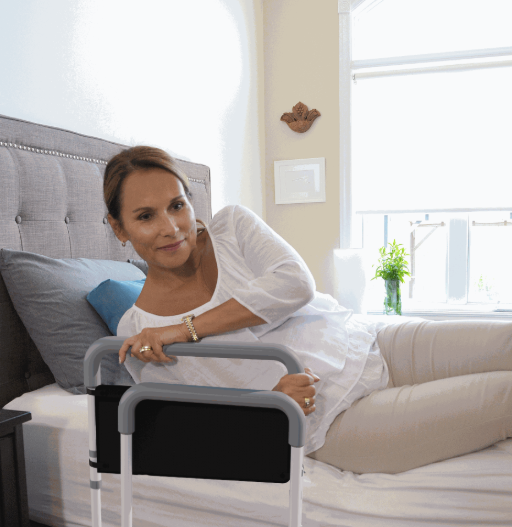
Why is there a new safety concern?
It is not a new issue.
Entrapment at the bedside has been a recognized safety issue since at least the late 1980s, with major regulatory and clinical attention emerging in the 1990s and early 2000s. There is a history of documented cases linking bed rails, transfer devices, and gaps in the sleep environment to serious injuries and deaths—in children and among older adults and people with cognitive or mobility impairments. This safety risk applies to all assistive devices when used at bedside. Read more about Entrapment Prevention Guidelines: www.fda.gov/bedsafety

Certified for Bedside Safety
We submitted our SuperPole, uPole, Assista-Rail, and Smart-Rail, for testing by an accredited independent third-party laboratory. We successfully passed strict criteria for durability, stability, and entrapment prevention requirements, first under ASTM F3186-17 and now under ASTM F3186-24 (Consumer Safety Specification for Adult Portable Bed Rails). ASTM International is a global organization that develops and publishes over 12,000 technical standards across various industries, including medical devices. Their intent is to prevent injuries.
Why did we change our instructions?
To meet the criteria for ASTM compliance, we needed to include information and warnings that would alert the installers and those who prescribe the products, to ensure the safety of clients and reduce the risk of entrapment. We recognize that the correct installation and placement of our products was the most important thing we could promote to ensure their safe use.
Warnings vs Suggested Positions
The yellow pages of the Bed Entrapment Prevention are included for ASTM compliance. They do not specifically depict our products but are the results of research and data showing where the greatest risks of entrapment occur. The adults most at risk of becoming trapped at beside are those with significant cognitive or mobility impairments.
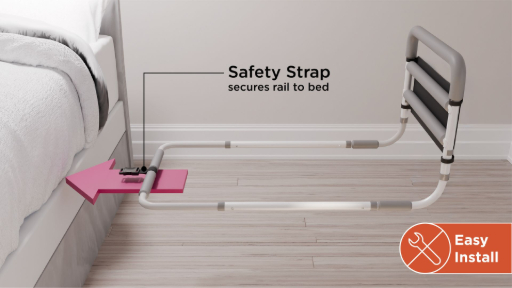
For bedrail products, it is very important to secure the strap to the opposite side of the bed to ensure that the rail cannot slip out of place creating a gap between the bed and the rail. Poles should be positioned against the bed or over 12” from the bed to prevent getting caught between bed and pole.
Positioning suggestions for poles in our product instruction manual, are only suggestions and may not work for individual clients. The transfer pole distance from the knees when seated, the position along a bathtub, and position along the bedside should be directly chosen for a client’s stature, movement patterns, range of motion, and environment. Healthcare professionals assess the placement of poles for functional movement and safe transfers specific to their clients.

Role of Healthcare Professionals
HealthCraft instructions are provided as guidelines only and include important safety warnings. They are not intended to constitute medical or clinical advice or to replace the independent judgment of qualified healthcare professionals. Clinicians and other professionals are responsible for assessing each individual and determining the appropriateness, installation location, and use of any product based on the specific needs and circumstances of those in their care.
Our warnings are there to educate clients, installers, and new prescribers, to reduce entrapment risks when placing products at a bedside, especially for someone with significant cognitive or mobility impairments.
For more information outlining how different healthcare professionals all play a part in fall risk reduction, download the resource here.
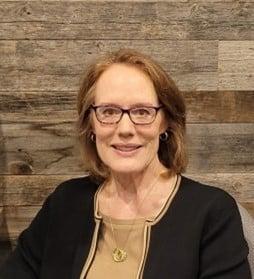
About the Author:
Sandy Alexander B.Sc.(O.T.) is our Community and Clinical Education Specialist at HealthCraft Products. She comes to us after a rewarding 36 years as an Occupational Therapist. Sandy's passion for enabling function, adapting environments, and improving the quality of life for others, drives our mission at HealthCraft. She is spreading the message of Fall Prevention through local community events, industry conferences, and throughout our North American dealer network.